We all know that fevers are common in children & infants, thousands of children & infants suffer a raised temperature each year for various reasons. The body’s normal temperature is around 37°C. Temperature can however vary according to the time of day and the age of a child or infant.
Generally, fevers happen when your child’s immune system is fighting off infections such as the common cold, coughs and ear infections or even infants suffering with teething.
HOW TO TAKE TEMPERATURE IN CHILDREN
♥ ORAL: The thermometer is inserted under the tongue, the mouth is closed and a reading is taken.
♥ RECTAL: The thermometer is gently inserted into the rectum (child’s bottom) and areading is taken.
♥ ARMPIT: The thermometer is placed under the armpit and the arm is held against the side of the body while a reading is taken.
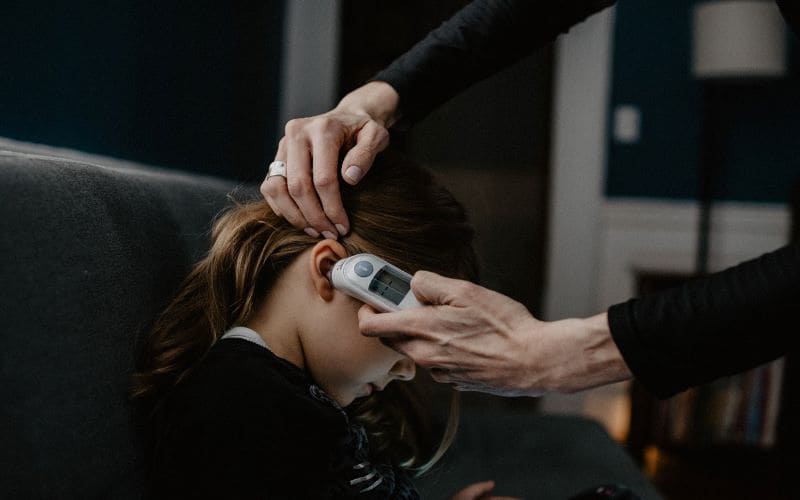
♥ EAR: A digital thermometer is inserted into the ear and a reading is taken.
It is important to remember that the temperatures can vary according to the part of the body where it is measured, so always take the temperature at the same site.
TIPS TO REDUCE FEVER
1. If your child seems unwell or feverish you can consider giving pain relief, such as Calpol (not recommended for children under 3 months) or Panado Paediatric syrup, refer to your child’s physician if the fever gets higher or persists.
2. Dressing the child in light clothing.
3. Keeping your child cool by ensuring a comfortable room temperature -take care not to make the room too cold or too hot.
4. A sponge soaked with lukewarm water or a luke warm bath can help to reduce fever – using a cold sponge or bath can have the opposite effect and can actually raise their temperature.
5. Most importantly, keep the child hydrated.
COLIC IN BABIES
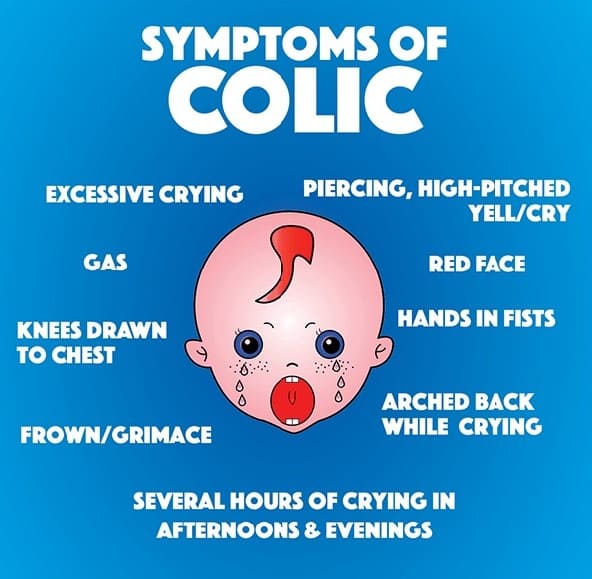
Does your baby show the following symptoms, if so then he/she may have colic:
- Inconsolable crying.
- Screaming.
- Extending or pulling up of his/her legs to his/her tummy.
- Passing gas.
- Enlarged or distended stomach.
- Arched back.
- Clenched fists.
- Reddened face after a long episode of crying.
Colic is very common in infants which affects about 1 in 5 babies, whether they are formula-fed or breast fed.
The cause of Colic varies and more than lightly can be due to digestion problems or sensitivity to something in the baby’s formula.
Breast feeding: Colic may arise from what a nursing mom may be eating, in which case the nursing mom may have to adjust her diet, it could also be from a formula which could be high in lactose, it may be a good idea to switch formulas to a lactose free formula like infosoy. You may also want to try Gripe water, which is safe for babies and can assist in soothing a crying colicky baby.
Colicky babies are often quite gassy. Some reasons of excess gas include intolerance to lactose, immature stomach, inflammation, or poor feeding technique.
SOME HINTS ON HOW YOU OR YOUR BABY’S NANNY/CARER CAN ASSIST IN SOOTHING YOUR BABY
• Lay them on their back in a darker, quiet room and lightly rub his/her tummy
• Swaddle them snugly in a blanket.
• Lay them across your lap and gently rub their back.
• Put a warm water bottle on your baby’s belly. Be careful that it is not to hot or too heavy
• Have them suck on a pacifier
• Soak them in a warm bath
• Abdominal massage in a clockwise motion can help relieve colic. Moving the baby’s legs up and down may also help easing colic and release excess gas. To perform the abdominal massage, baby needs to be calm so their stomach is relaxed.
By holding the baby in an upright position when feeding may help to reduce the amount of air swallowed. If he/she is bottle-fed it may be a good idea to have a fastflow teat will help to reduce the amount of swallowed air by allowing milk to flow freely when the baby sucks the teat. There are also specialised teas on the market, but these can be rather pricey.
It is very important to burp the baby during and after his/her feed, the secret it patience, some babies take longer to burp.